Enterprise Knowledge Management: Protecting Company Memory with AI
Explore AI-assisted knowledge management: preserving institutional memory, improving document accessibility, and helping teams reach accurate answers faster.
Enterprise knowledge management is the discipline of collecting, organizing, updating, and delivering what the company knows to the people who need it. In SMEs this discipline often lags behind growth: knowledge sits with experienced employees, in old folders, email threads, or documents that are never refreshed.
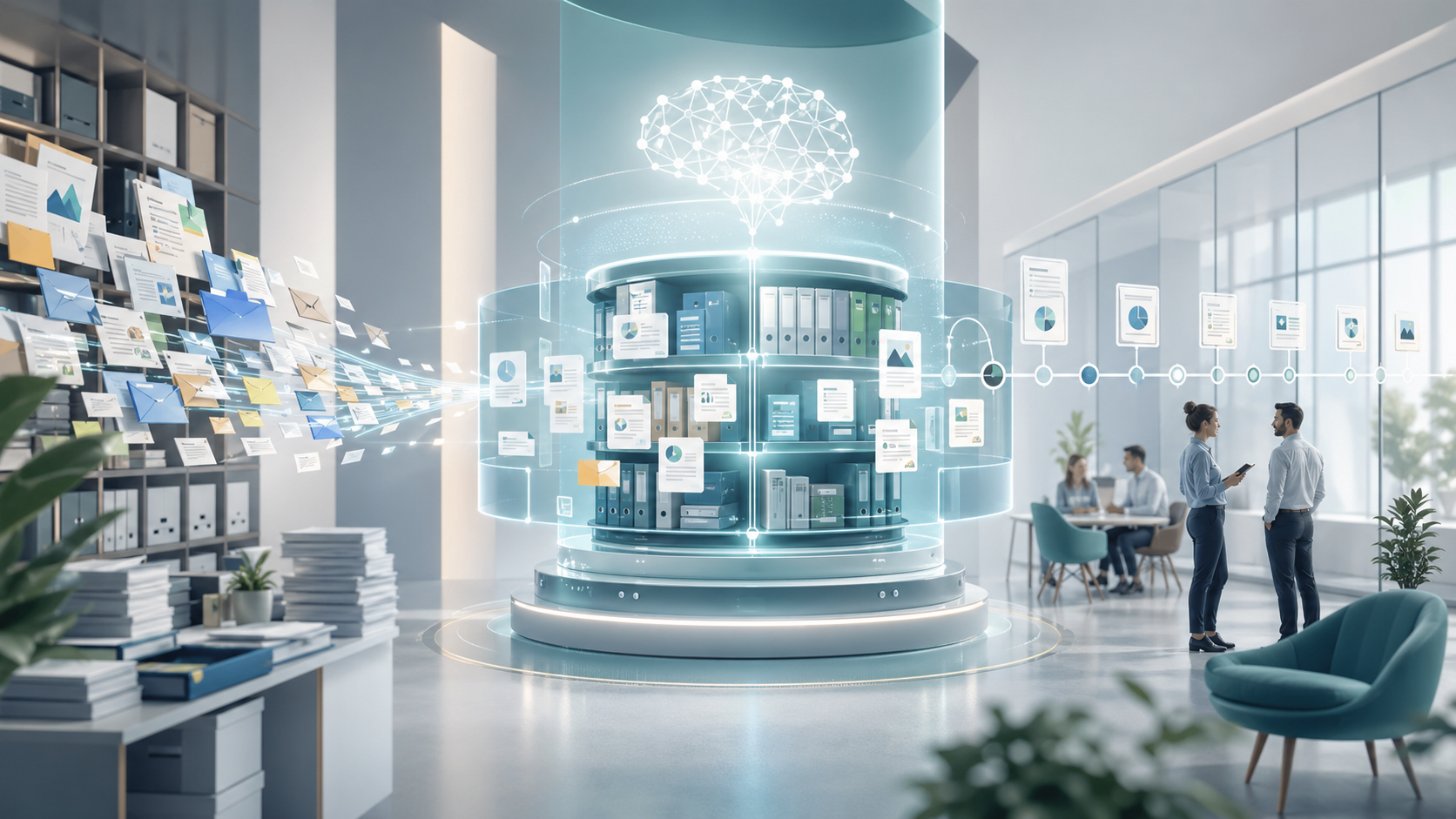
AI-assisted knowledge management makes that scattered material easier to reach. Assistants like KobiGPT, which operate on your company documents, let employees ask questions in natural language and get answers aligned with internal sources. That protects institutional memory, strengthens operational continuity, and speeds up onboarding for new hires.
Why is “company memory” at risk?
In many businesses, critical know-how is tied to specific people. When someone leaves, nuances in proposals, customer-specific notes, operational steps, or the rationale behind past decisions can disappear. Even when files exist, finding the current version takes time.
This is not only wasted time. It can drive inconsistent customer experiences, processing errors, incorrect pricing, and extra internal communication load. Knowledge management reduces that risk by building a repeatable system.
How is AI used in knowledge management?
AI changes how people access information. Instead of hunting through folders, users can ask directly—for example: “What is the monthly credit limit on the Pro plan?”, “What are the steps in our new customer onboarding?”, or “When do we accept a return request?”—and receive answers grounded in internal documents.
This is especially valuable for growing teams. New hires do not need to interrupt senior colleagues for every small question. Managers can focus on keeping documents current instead of repeating the same explanations.
Document structure for better AI outcomes
To get good answers from an assistant, documents should be clear and up to date. Very long files without headings, or contradictory versions, make it harder for the system to retrieve the right context.
Principles that help:
- Each document should have one primary topic.
- Headings should resemble the questions people actually ask.
- Archive old procedures and label the authoritative current version.
- Keep department-specific material in separate folders.
- Write critical decisions and exceptions as explicit bullet points.
Department-scoped knowledge management
KobiGPT’s department model aligns knowledge access with how the organization actually works. Sales works with pricing, proposals, products, and customer objections; operations focuses on delivery, quality control, and service workflows.
Users see information relevant to their role. Information flows faster while unnecessary cross-visibility is reduced. Combined with roles and permissions, this yields a more controlled knowledge architecture.
Measurable benefits
AI-assisted knowledge management is not only a technology investment. When set up well, it can reduce operational drag and improve productivity. Common outcomes include:
- Shorter ramp time for new hires.
- Fewer repeated internal “micro questions.”
- More consistent customer-facing answers.
- Clearer visibility into whether documents are stale.
- Easier for leadership to spot knowledge gaps.
Conclusion
Protecting company memory is a strategic need for growing SMEs. When knowledge is trapped in people, scattered files, or old threads, operational risk rises. AI-assisted enterprise knowledge management reduces that risk and helps employees reach the right information faster.
KobiGPT turns company documents into department-scoped AI assistants—making institutional memory more accessible, more controlled, and more sustainable.

